Selecting appropriate support for someone living with disability is not always an easy option. Families regularly spend time comparing different NDIS services and having to question what will actually help their sons or daughters grow, feel confident, and do things more independently. Two of the most common options are in-home support and day centre programs.
Both services play an important role, and neither is better in every situation. In-home support allows participants to live a daily life in the confines of their home’s comfort, while day centre programs enable learning, socialisation and participation within the community. In many cases, people benefit from a combination of both. However, there are times when a centre-based program can offer experiences that are difficult to replicate at home.
Understanding how these supports differ can make it easier for families and participants to decide what works best.
What Is In-Home Support?
In-home support is just what it sounds like: A trained support worker comes to the participant’s home, providing assistance with daily tasks. The idea is to give people the chance to stick with their schedule, but also stay in a place they know and love.
Support workers can help with things like:
- Activities of daily living like bathing and dressing
- Preparing meals
- Household chores such as cleaning or doing laundry
- Medication reminders
- Support in preparing for appointments or tasks
For many participants, this kind of support is essential. Being at home can feel safe, especially for individuals who may find unfamiliar places overwhelming. The flexibility of in-home support is another advantage, as it can easily be scheduled around therapies, appointments, or family commitments.
Although in-home support is critical to daily care, it often focuses on preserving everyday routines rather than generating new social or learning experiences.
What Are Day Centre Programs?
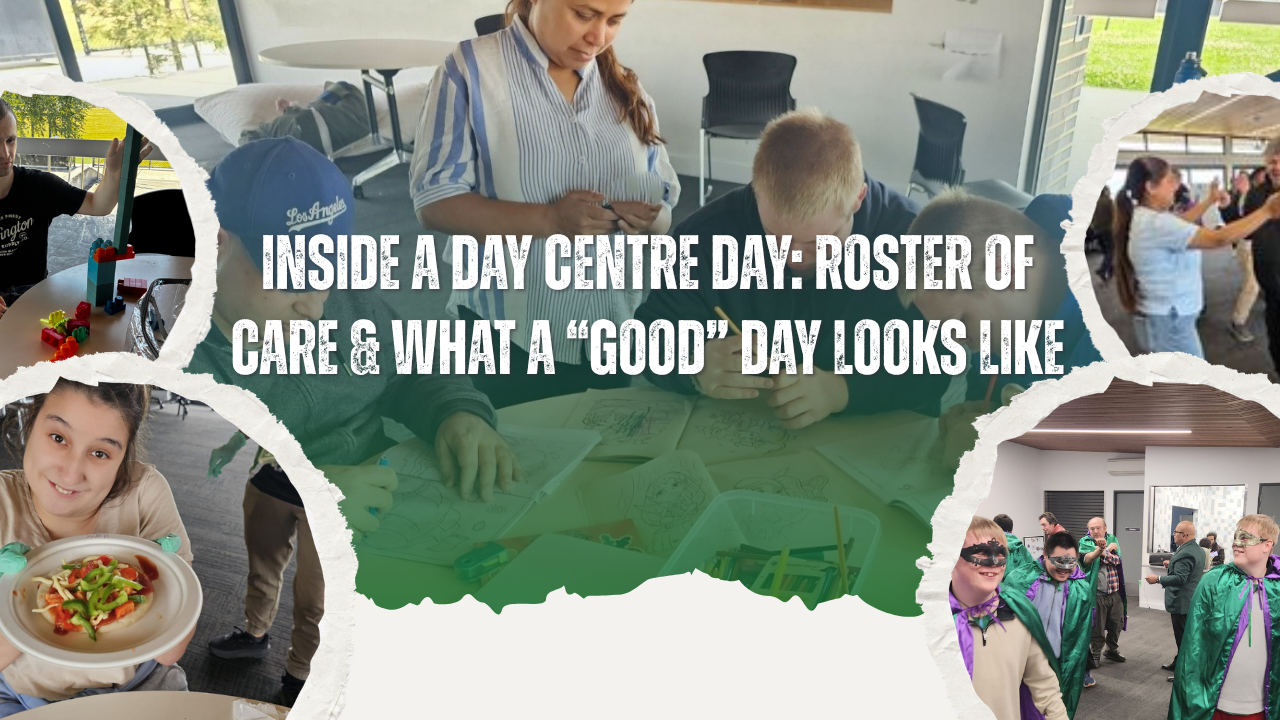
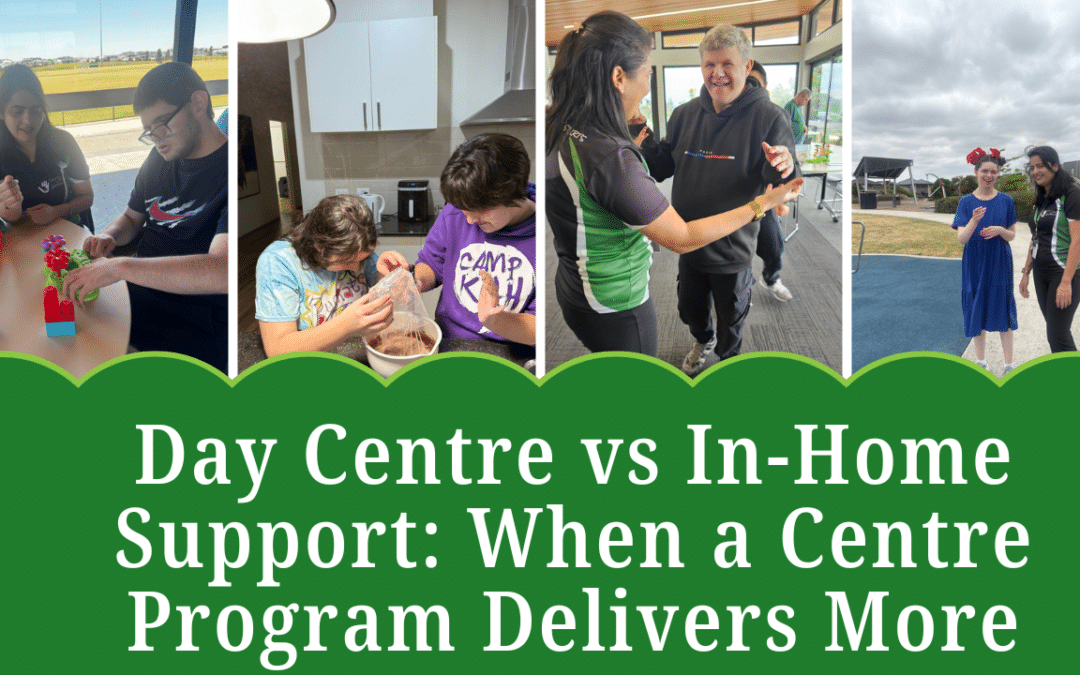
Day centre programs provide participants with the ability to be involved in opportunities within their community as well as a break from being at home. Instead of staying home all day, participants attend a centre where they can take part in activities designed to build skills, confidence, and social connections.
These programs usually follow a relaxed but structured routine. Participants might start the day with a group activity, join a creative workshop, take part in a cooking session, or head out for a community outing.
Common activities in day programs include:
- Art, music, or creative workshops
- Cooking and practical life skills
- Social games and group activities
- Exercise or wellness sessions
- Visits to parks, cafés, or community spaces
The atmosphere is supportive and welcoming. Participants are guided by trained staff while also having the chance to interact with peers, try new activities, and develop friendships.
When In-Home Support Makes the Most Sense
There are many situations where in-home support is the best option.
Some participants require regular help with personal care or mobility. In these cases, receiving support in the home directly alleviates daily routines by infusing comfort and inviting safety.
Others are just more relaxed in familiar settings. Home can be the most calming place to receive support for those who have trouble outside or unpredictable environments.
Another reason families select in-home services is that it’s flexible. Support workers can attend at times that work around therapy sessions, medical appointments or school schedules.
While these benefits are significant, staying at home for long portions of the day can also restrict opportunities to meet people and try new things.
When a Day Centre Program Can Provide More
For many of those who attended a day centre it exposes them to possibilities that are hard to achieve through in-home support alone.
One of the greatest benefits is social connection. Just meeting new people, experiencing shared activities and forming friendships can have a huge impact on a participant’s confidence and wellbeing. A lot of people also find comfort in community — the connection found within a group.
Day centre programs are indeed a great place for practical life skills. Participants might practice cooking simple meals, managing small budgets when they go shopping or even developing communication skills through group games. Learning in a group is more a matter of sharing than lessons learned.
A second benefit is the structure these programs offer. A routine will help keep them focused and productive. Usually there is more than a half day of silence in everyone’s home, but participants in day centre programs have activities to look forward to and people with whom they can connect.
Centres are also designed with accessibility and participation in mind. Many offer dedicated spaces for creative activities, skill-building sessions, or relaxation, giving participants the chance to explore different interests.
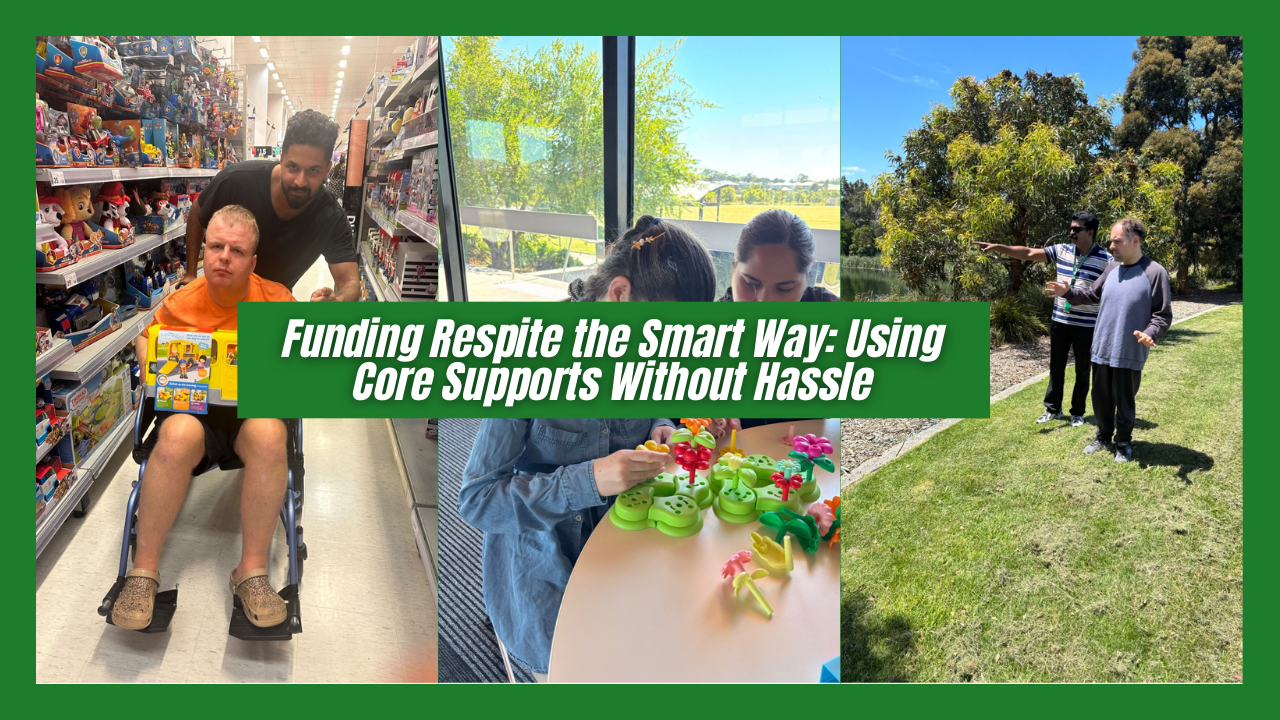
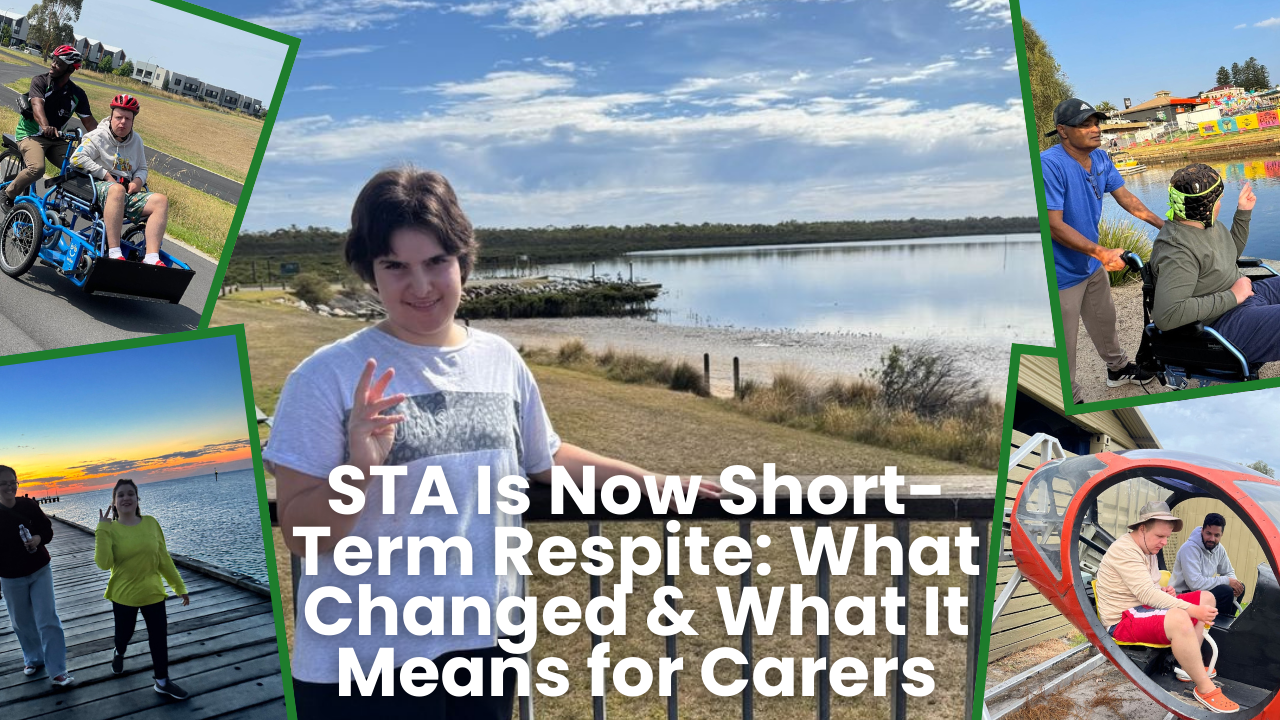
Community outings are another highlight. The visit to parks, local markets or cafés helps participants become comfortable working their way through the community and speaking with people outside of their normal circle.
Supporting Families and Carers
Day centre programs are not just great for the participants but can also have a truly positive impact on families and carers. Peace of mind comes from knowing their loved one is immersed in a safe, fun and engaging day.
It allows carers to undertake tasks they might not otherwise have time for, to concentrate on work or to relax. This balance is important when it comes to wellbeing and preventing burnout.
Finding the Right Balance
The solution in most scenarios is not to choose one service or the other but use both.
For example, in-home support may help a participant with their morning routine or personal care, while day centre programs provide social activities and skill development during the day.
This combination balances out and gives better support. Participants get the one-on-one support that they require at home, and benefit from being part of a centre program.
At Special Care Australia, our Day Centre Program is designed to offer more than just a place to spend the day — it provides purpose, connection, and meaningful opportunities for growth. Our centre-based programs are carefully structured to support participants to build confidence, develop practical life skills, and form genuine social connections in a safe and welcoming environment.
Through engaging activities, community participation, and consistent routines, participants are supported to explore their interests, strengthen independence, and feel a true sense of belonging. Our experienced team focuses on each individual’s goals, abilities, and pace, ensuring support is respectful, empowering, and outcomes-focused.
For many participants, Special Care Australia Day Centre Program becomes a cornerstone of their week — a place where friendships grow, confidence builds, and everyday achievements are celebrated. It complements in-home supports by creating opportunities that extend beyond the home, supporting fuller participation in community life and long-term wellbeing.