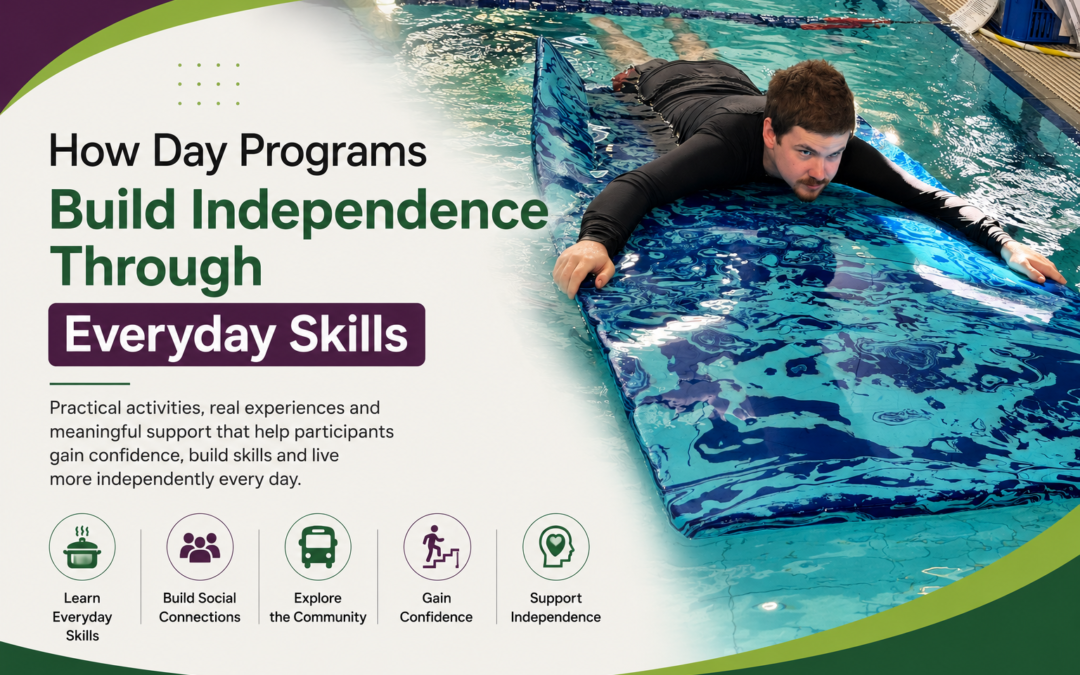
Unlocking Autonomy: How NDIS Day Programs Build Daily Living Skills
Key Takeaways
- Practical Skill Development: Day centre activities focus on real-world tasks like cooking, budgeting, shopping, and public transport navigation to foster genuine autonomy.
- Social Connection & Confidence: Group environments encourage peer connections, helping participants build communication skills and form meaningful friendships in a safe, structured space.
- Tailored Personal Goals: High-quality programs align every activity with individual NDIS goals, ensuring that support matches personal aspirations and developmental needs.
- Relief for Families & Carers: Structured day activities provide primary carers with essential respite while reassuring them that their loved ones are gaining valuable life experience.
- Pathways to Greater Autonomy: The everyday life skills learned in day programs often serve as stepping stones toward supported employment, volunteer work, or independent living.
What Are NDIS Day Programs?
NDIS day programs are structured, community-based or centre-based activities designed to support people living with a disability in learning new skills, socialising, and actively participating in their local communities. Rather than serving as passive care facilities, modern day programs focus on skill development, personal growth, and individual empowerment.
At a high-quality day centre, no two days look exactly the same. One morning might involve planning a meal budget and shopping for ingredients at a local market, while the afternoon centres around a hands-on cooking workshop or a digital skills group. Programs offer a rich mix of centre-based activities and community participation outings, allowing participants to practice what they learn in real-world settings.
For many participants across Victoria, disability day programs in Melbourne provide a safe, encouraging space to step outside their comfort zone, make new friends, and work directly toward their personal NDIS goals.
Why Everyday Skills Matter for Independence
Independence is rarely about mastering complex, abstract concepts. Instead, it is built on the daily habits and practical tasks that make up everyday life. Being able to prepare a meal, catch a bus, or manage personal spending gives a person control over their own choices and routine.
When a person lacks confidence in these basic daily living skills, they must rely heavily on family members or support workers for simple tasks. By breaking these tasks down into manageable steps, life skills programs help participants gain direct control over their environments.
Learning everyday skills leads to tangible outcomes:
- Self-Reliance: Decreasing reliance on full-time support workers for daily routines.
- Increased Self-Esteem: Experiencing the pride that comes from completing tasks independently.
- Safety & Security: Knowing how to handle common, real-world situations like crossing busy streets, handling cash, or navigating public spaces safely.
- Choice & Control: Empowering participants to decide what they want to eat, where they want to go, and how they want to spend their time.
Essential Skills Participants Develop in Day Programs
Day centre programs take a holistic approach to skill-building. By blending practical instructions with social engagement, support teams guide participants through various learning domains.
| Skill Domain | Practical Activities | Long-Term Independence Goal |
|---|---|---|
| Cooking & Daily Living | Meal planning, knife safety, recipe reading, kitchen hygiene | Preparing healthy meals at home without supervision |
| Travel & Mobility | Reading timetables, using Myki cards, identifying stops | Navigating the local community safely and independently |
| Financial Literacy | Budgeting for groceries, handling money, digital banking | Managing personal allowances and making smart spending choices |
| Communication & Social | Group discussions, active listening, conflict resolution | Building meaningful relationships and self-advocating |
| Digital Literacy | Using smartphones, searching the web, online safety | Accessing community information and keeping in touch with friends |
Community Participation: Moving Beyond the Day Centre
True independence cannot be learned entirely inside a classroom. While centre-based activities offer a comfortable baseline for learning, NDIS community participation steps out into the wider neighbourhood to apply those lessons.
Through structured outings, participants interact directly with local shopkeepers, library staff, cafe workers, and community members. This real-world interaction is vital for social inclusion.
Social Confidence and Friendships
Social isolation is one of the most significant challenges faced by people living with a disability. NDIS activities inside a day program prioritise group dynamics, bringing together individuals with shared interests to build authentic, peer-to-peer relationships.
When participants attend a day centre regularly, they become part of a consistent social circle. Group tasks—such as collaborating on an art project, participating in a team sport, or planning a group day trip—create natural icebreakers. These shared experiences foster deep friendships that extend beyond program hours.
Communication Skills and Self-Advocacy
Expressing needs and standing up for oneself are essential elements of independent living. Disability day programs provide dedicated spaces for participants to work on both verbal and non-verbal communication skills.
Facilitators encourage participants to:
- Express personal choices, such as choosing lunch locations.
- Practice active listening and respect the views of peers.
- Use assistive communication technology effectively in real-world scenarios.
- Communicate goals, likes, and boundaries directly to support teams.
Decision-Making in Daily Routines
Making choices is a muscle that strengthens with practice. Many individuals entering an NDIS day program are accustomed to having decisions made for them by well-meaning carers. Day programs deliberately shift this dynamic by placing decision-making power back into the participant’s hands.
By offering simple, structured choices—such as selecting recipes for a weekly cooking session or deciding between two travel routes for an excursion—participants learn to weigh options and consider consequences.
Travel Training: Unlocking Free Community Access
Public transport opens up the world. Without travel skills, a person’s physical world remains restricted to where others can drive them. Travel training is therefore a core pillar of NDIS day programs.
Support staff break travel training into progressive milestones:
- Route Planning: Learning to use journey-planning apps or reading printed timetables.
- Ticketing: Understanding how to buy, top up, and use transport cards.
- Safety: Understanding pedestrian safety and transport etiquette.
- Independent Practice: Shadowing participants from a distance until they are comfortable travelling alone.
Cooking and Budgeting: Foundations of Domestic Living
Preparing food and managing personal money are two core competencies required for independent living. Day centre kitchens serve as hands-on learning labs where participants master:
- Hygiene: Handwashing, sanitising surfaces, and safe food storage.
- Appliance Safety: Using ovens, microwaves, and blenders safely.
- Nutrition: Understanding food groups and reading nutritional labels.
- Budgeting: Calculating ingredient costs and managing a shopping budget.
Technology Skills for the Modern World
Digital literacy is essential for modern independence. Day programs incorporate technology training to keep participants connected, informed, and safe. Key areas include navigating touchscreens, downloading helpful apps, practicing online safety, and using video calls to stay in touch with family.
Preparing for Employment and Volunteering
For many, the ultimate goal of developing daily living skills is transitioning into supported or open employment. Day centre activities act as a springboard by instilling workplace habits like punctuality, task completion, team communication, and self-advocacy.
How Families and Carers Benefit
While day programs focus on participant outcomes, the impact on families is equally significant. Caring for a loved one is rewarding but requires immense energy. When a participant attends a trusted day centre, families receive dedicated time for rest or personal tasks, knowing their loved one is in a safe, productive environment.
Choosing the Right NDIS Day Program
Finding the right provider is critical. When evaluating options, consider the following:
- Goal Alignment: Does the provider tailor activities to your specific NDIS plan?
- Staff Quality: Are the support workers experienced, qualified, and empathetic?
- Variety: Does the program offer a healthy balance of skill development and social activities?
- Participant Choice: Are participants involved in scheduling their day?
At Special Care Australia, our programs are built around the individual aspirations of every participant. By pairing structured life skills training with engaging community outings, we ensure participants receive the support they need to thrive.
Contact Special Care Australia today to speak with our team and explore how our Day Centre/Weekend Activities can help you build the skills, confidence, and community connections you deserve. You can also view our range of Community Participation services or learn about our Supported Independent Living pathways.
Frequently Asked Questions
1.What happens in an NDIS day program?
It offers a mix of structured group activities, hands-on skill workshops, and community outings like cooking classes and social trips.
2.Who can attend day programs?
They are designed for teenagers, adults, and seniors living with physical, intellectual, sensory, or psychosocial disabilities.
3.Are day programs funded by the NDIS?
Yes, they are typically funded under Core Supports (Assistance with Social, Economic and Community Participation) or Capacity Building.
4.Can participants choose their activities?
Yes. Quality providers place a strong emphasis on participant choice and control over their daily schedule.
5.How many days a week can a participant attend?
Attendance is flexible, ranging from one to five days per week depending on funding and personal preference.
6.What is the difference between centre-based and community participation?
Centre-based activities happen on-site at a facility, while community participation involves applying skills in public spaces.
7.Do day programs offer transport assistance?
Many providers, including Special Care Australia, offer transport support to ensure participants can access activities.
8.Can day programs help with employment?
Yes, they teach essential work habits like punctuality, communication, and task management.
9.How do I get started?
Contact a registered provider like Special Care Australia to discuss your NDIS goals and program options.